
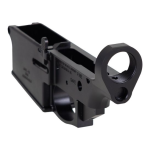
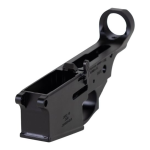
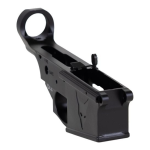
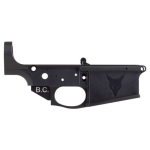
bolt catch
$99.99
Details
Brand: Pro Tactical Armory
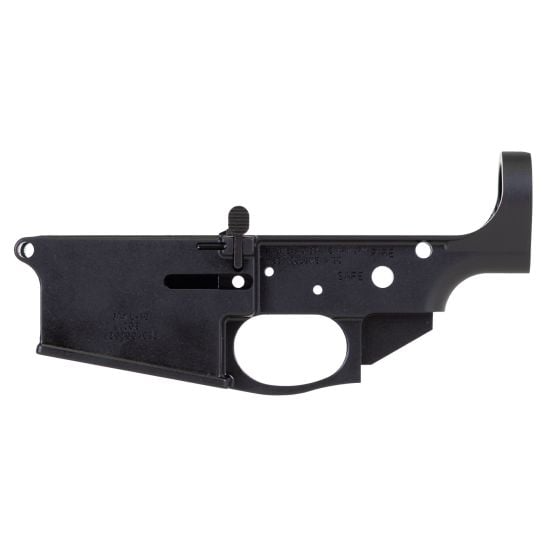
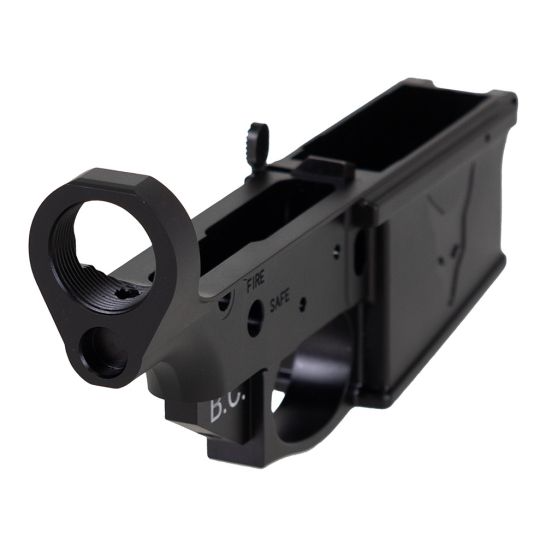
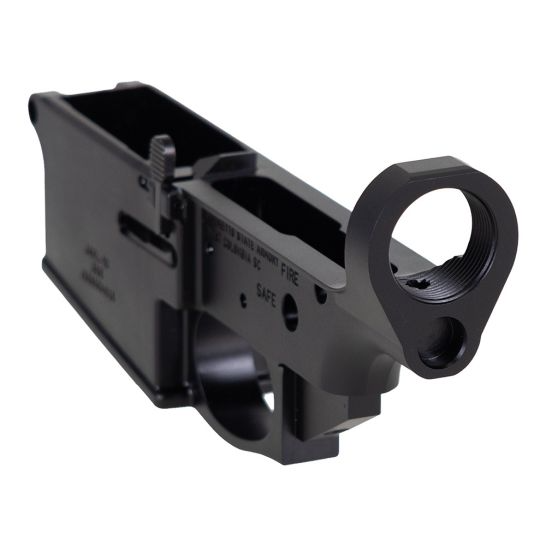
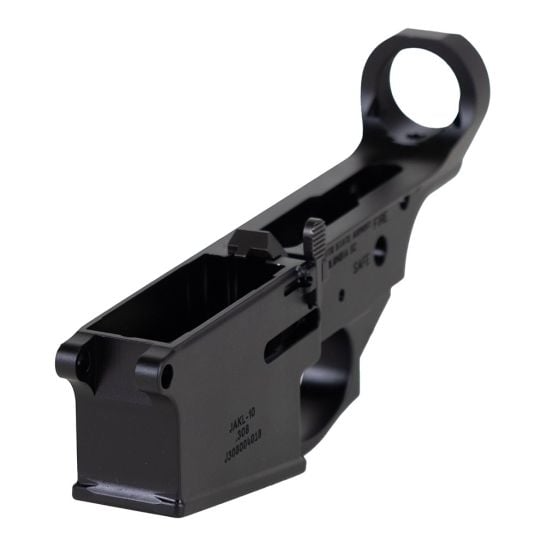
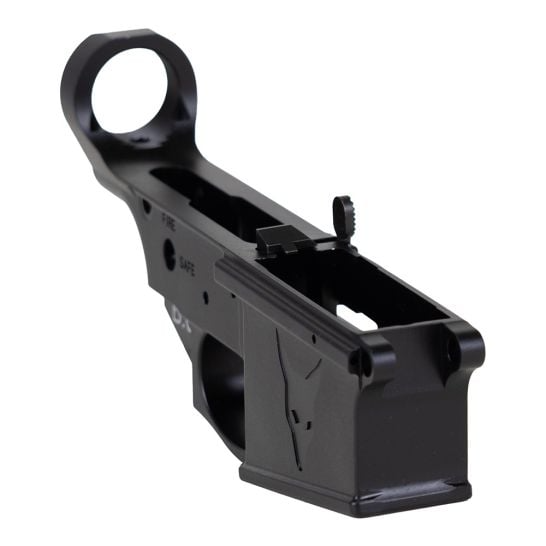
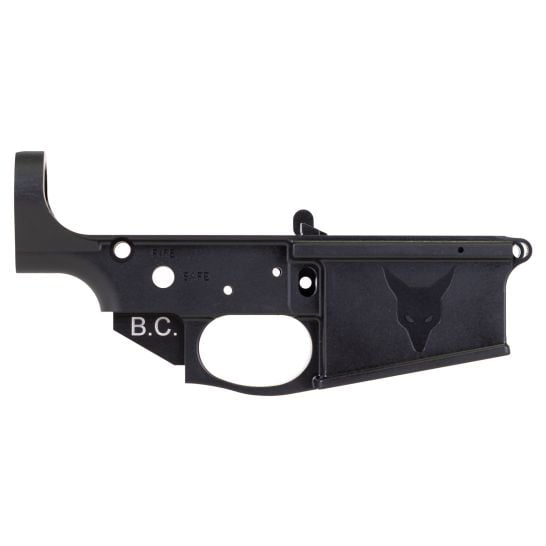
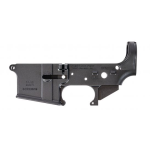
Model: BLEM Jakl-10 Stripped Lower
Platform: Jakl-10
Caliber: Multi-Caliber
Receiver Material: 7075-T6 Aluminum
Receiver Finish: Black Anodized
Includes: Bolt Catch Installed
Features
Built to serve as the foundation for a powerful large-frame platform, the BLEM JAKL-10 Stripped Lower Assembly is precision machined from 7075-T6 aluminum forging and finished with a durable hardcoat anodized coating for enhanced wear and corrosion resistance. This blemished lower comes with the bolt catch installed to simplify assembly while maintaining compatibility with JAKL-10 components. Featuring a Jakl engraving for a distinctive appearance, the stripped configuration allows builders to customize the fire control group, grip, and other lower components, making it an excellent starting point for a reliable and personalized JAKL-10 build.
** These Jakl-10 Stripped Lower Assemblies will have cosmetic blemishes that do not affect function. This may include but is not limited to, forging marks under the finish, scratches, and slight variations in the finish, color, and/or coating.
Bolt Catch: Function, Parts, Features & Complete Guide
A bolt catch is an important firearm component that controls the position of the bolt or bolt carrier.
On many modern rifles, the bolt catch can hold the action open after the firearm has cycled. It can also allow the bolts to return to its normal position when the catch is released.
The exact design depends on the firearm. However, the term bolt catchs is especially common when discussing the AR-15 and similar rifle platforms.
In this guide, we explain what a bolts catch is, how it functions, its main parts, common designs, and why it is important.
What Is a Bolt Catch?
A bolt catch is a mechanical component that can hold a firearm’s bolts or bolt carrier in an open position.
On an AR-15-style firearm, the bolt catch is located on the lower receiver. Brownells’ AR-15 lower receiver schematic identifies the bolt catch, bolts catch pin, bolt catch plunger, and bolt catch spring as separate components.
The bolt catch therefore works as part of a larger mechanical system.
When the catchs is engaged, it can prevent the bolt carrier from moving fully forward. When it is released, the bolst carrier can move forward as designed.
What Does a Bolt Catch Do?
The main function of a bolts catch is to control the bolt’s position.
On an AR-15, the bolts catch can hold the bolt carrier to the rear. This provides a visual and physical indication that the action is open.
The mechanism can also be released manually.
In addition, the bolts catch can interact with the magazine follower. This allows the action to remain open after the last round has been fired on compatible firearms.
Therefore, the bolts catch is both a manual control and part of the firearm‘s operating system.
AR-15 Bolt Catch
The AR-15 bolt catch is one of the most recognisable versions of this component.
It is installed in the lower receiver and works with the bolt carrier group.
A typical AR-15 bolt catch assembly includes:
- Bolts catch
- Bolts catch pin
- Bolt catch plunger
- Bolts catch spring
The exact components can vary between manufacturers and receiver designs.
However, these parts work together to provide the catch’s movement and spring tension.
How Does an AR-15 Bolt Catch Work?
The bolts catch uses a small lever and spring-loaded mechanism.
When the catch is raised into its locking position, it can engage the bolt carrier.
The mechanism can also respond to the magazine follower. On a compatible AR-15, the follower can push the bolt catch upward after the magazine is empty.
As a result, the bolts carrier remains locked to the rear.
The user can then release the bolt catch using the external control.
The exact operation can vary between firearm designs. Therefore, always follow the manufacturer’s owner’s manual for a specific firearm.
Bolt Catch and Bolt Carrier
The bolts catch does not operate independently.
It interacts with the bolt carrier group, commonly called the BCG on an AR-15.
The bolt carrier group moves during the firearm’s normal operating cycle. The bolt catch can stop this movement when it reaches the appropriate position.
This relationship is important because the bolts catch must engage the correct part of the moving assembly.
Consequently, a properly functioning bolt catch is an important part of the firearm’s operating system.
Bolt Catch and Magazine
The magazine also plays an important role in bolts-catch operation on many AR-15-style firearms.
A magazine follower can push the bolt catch upward when the magazine becomes empty.
The bolt catch then holds the bolts carrier to the rear.
This feature provides an indication that the magazine is empty and the action is open.
However, different magazines and firearm designs can behave differently. Therefore, compatibility should always be checked with the firearm manufacturer’s specifications.
Main Bolt Catch Parts
A bolt catch assembly contains several small components.
Bolt Catch
The bolt catch itself is the main lever.
It contains the surfaces that interact with the bolts carrier and the rest of the mechanism.
Bolt Catch Pin
The bolts catch pin holds the catch in position inside the receiver.
It allows the catch to pivot while remaining secured to the firearm.
Bolt Catch Spring
The spring provides the force needed to return the bolt catch to its normal position.
Spring tension is therefore an important part of the mechanism.
Bolt Catch Plunger
The plunger works with the spring and bolt catch.
Together, these parts allow the catch to move while maintaining controlled tension.
Brownells lists all four components in its AR-15 lower receiver schematic.
Standard Bolt Catch vs Enhanced Bolt Catch
Bolt catches can have different external shapes.
A standard bolts catch generally follows the dimensions and design of the original firearm.
An enhanced bolts catch may have a larger or differently shaped control surface.
For example, Brownells has documented enhanced AR-15 bolt catches with enlarged areas intended to make the control easier to locate and operate.
However, enhanced designs are not necessarily compatible with every firearm.
Therefore, compatibility is an important consideration when researching a particular bolt catch.
Bolt Catch Materials
Bolts catches are commonly made from metal.
Steel is widely used because the component is exposed to repeated mechanical forces.
Different manufacturers may use different steels, finishes, and manufacturing processes.
The material can affect durability, corrosion resistance, and overall weight.
However, material alone does not determine quality.
The complete design, manufacturing process, dimensions, and quality control also matter.
Bolt Catch Finish
A bolts catch can have different surface finishes.
Common finishes may include black oxide, phosphate, or other protective coatings.
The purpose of a finish can include corrosion protection and surface durability.
Appearance can also vary between manufacturers.
Therefore, two bolts catches may perform the same basic function while looking different.
Bolt Catch Design Differences
Not every bolt catch is identical.
Different firearm platforms can use different designs. Even within the AR-15 family, manufacturers may use slightly different dimensions or controls.
Some bolt catches have larger control surfaces. Others follow a more traditional profile.
There are also designs intended for ambidextrous operation.
Because of these differences, it is important to identify the exact firearm before evaluating compatibility.
Ambidextrous Bolt Catch
An ambidextrous bolts catch provides additional control access from both sides of a firearm.
The goal is to allow the bolts catch to be operated from different positions.
However, ambidextrous designs vary considerably.
Some systems use an additional lever. Others use a redesigned lower receiver and control arrangement.
Therefore, the term does not describe one universal design.
Bolt Catch Reliability
A bolts catch must work consistently because it interacts with several moving parts.
The catch, pin, spring, and plunger must work together correctly.
Magazine interaction is also important on compatible AR-15 platforms.
If a bolts catch does not function correctly, the action may fail to remain open when expected.
For that reason, manufacturers provide specific maintenance and inspection instructions.
If a firearm has a suspected mechanical problem, professional inspection is the safest approach.
Common Bolt Catch Problems
Several issues can affect bolts-catch operation.
Failure to Hold the Bolts Open
The bolt may fail to remain open after the magazine is empty.
This can have several possible causes. The magazine, bolt catch, spring, plunger, or related components may need inspection.
Difficult Movement
A bolts catch should move as designed without excessive resistance.
Unusual stiffness or binding can indicate a mechanical issue.
Visible Damage
A damaged or deformed bolts catch should not be ignored.
Because the component interacts with the moving action, damage can affect normal operation.
Incorrect Compatibility
An incorrect replacement part can also cause problems.
Dimensions and receiver designs can differ.
Therefore, the correct manufacturer specifications are important.
Bolt Catch Maintenance
Maintenance requirements depend on the firearm.
Owners should follow the manufacturer’s instructions for cleaning, inspection, and lubrication.
The manufacturer’s manual should always take priority over general advice.
For example, Glock provides dedicated owner’s manuals and preventive-maintenance information for its own firearms. Other manufacturers provide similar documentation for their platforms.
The important point is simple: do not assume that one maintenance procedure applies to every firearm.
Bolts Catch vs Bolt Release
The terms bolts catch and bolt release are sometimes used interchangeably.
However, they can describe different aspects of the same control.
The bolt catch is the component that holds the bolt or bolt carrier open.
The bolt release refers to the action of releasing that bolt catch.
On some firearms, the external control may be called a bolt release. On others, it is commonly called a bolt catch.
Therefore, terminology can vary by manufacturer and firearm platform.
Why Is the Bolts Catch Important?
The bolts catch provides important information about the firearm’s operating condition.
When the action is held open, the user can visually see that the bolt is not fully closed.
This can be particularly useful when checking the condition of a firearm.
The mechanism also provides a way to control the bolt position.
As a result, even though the bolt catch is a relatively small component, it has an important role.
Bolts Catch on Different Firearms
The term bolts catch is most strongly associated with rifles such as the AR-15.
However, similar mechanisms exist on other firearm platforms.
The design can differ significantly.
Some firearms use a slide stop instead of a traditional bolts catchs. Others use different mechanical systems to hold the action open.
Therefore, the term should always be considered in the context of the specific firearm.
Choosing the Correct Bolts Catch
When researching a replacement or compatible bolts catchs, the first step is identifying the firearm.
Check the:
- Manufacturer
- Model
- Receiver type
- Generation or production version
- Existing component specifications
- Manufacturer compatibility information
Compatibility is especially important for AR-15-style receivers.
A part that fits one platform may not necessarily fit another.
For that reason, manufacturer documentation is the best starting point.
Bolt Catch Safety Considerations
A bolts catch is a firearm component, so safety should always come first.
Before handling or inspecting a firearm, make sure it is unloaded and follow the manufacturer’s safety instructions.
Do not rely only on the position of the bolts catch to determine whether a firearm is unloaded.
Always verify the chamber, magazine, and firearm condition according to the manufacturer’s safety procedures.
If you are unsure about a mechanical problem, consult a qualified gunsmith or the firearm manufacturer.
Frequently Asked Questions
What is a bolts catch?
A bolts catchs is a mechanical component that can hold a firearm’s bolt or bolt carrier in an open position.
What does an AR-15 bolt catch do?
An AR-15 bolts catch can hold the bolt carrier to the rear. On compatible systems, the magazine follower can activate the catch after the last round.
Where is the bolts catch located?
On a typical AR-15, the bolts catchs is located on the lower receiver.
What parts make up a bolt catch assembly?
A typical AR-15 assembly includes the bolts catchs, bolts catchs pin, bolt catch spring, and bolt catch plunger.
Is a bolts catchs the same as a bolts release?
The terms can refer to related functions. The bolts catchs is the component that holds the bolt open, while the bolt release describes releasing that catchs.
Can bolt catches be different sizes?
Yes. Different manufacturers and firearm platforms can use different designs and dimensions.
What is an enhanced bolts catch?
An enhanced bolts catchs is a redesigned version that may have a larger or differently shaped control surface.
Why does my bolts catch not hold the bolts open?
There can be several possible causes, including magazine interaction, mechanical wear, damaged components, or compatibility issues. A qualified professional should inspect a firearm with a suspected mechanical problem.
Final Thoughts
The bolts catch is a small but important firearm component.
On the AR-15 platform, it works with the bolt carrier, magazine, spring, plunger, and other components to control the position of the action.
There are several types of bolts catches. Standard, enhanced, and ambidextrous designs can have different shapes and features.
However, compatibility remains important.
Overall, understanding the bolts catchs helps explain how modern firearm actions work. For any specific firearm, the manufacturer’s documentation should always be the primary source for operation, maintenance, and safety information.
Reviews
There are no reviews yet.